Lilly Pulitzer Market Research
Reframing the “Lilly Look”
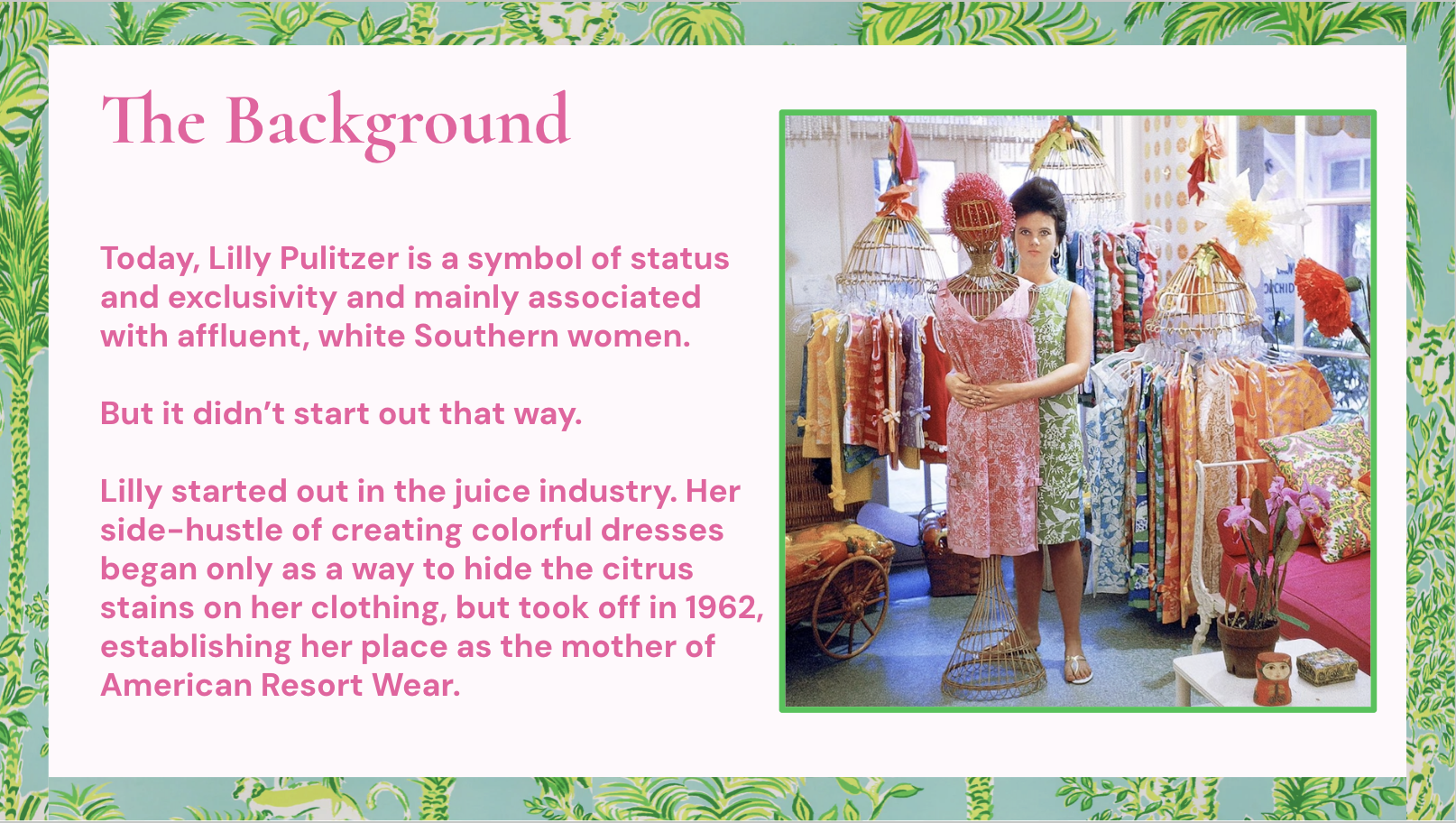
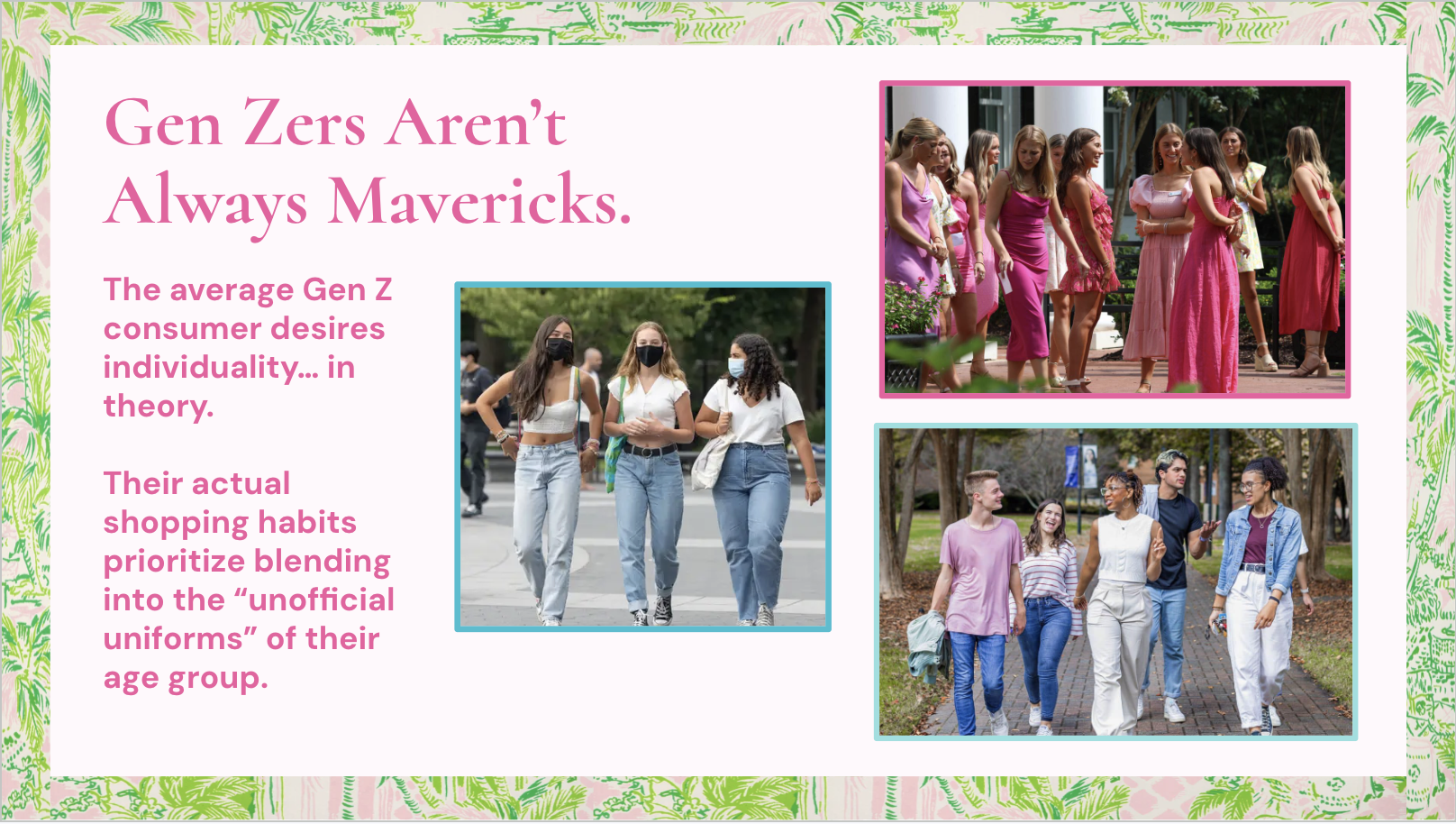
Perceptions of Lilly Pulitzer among college aged consumers reveal a tension between nostalgia and present day relevance. Gen Z students at the University of North Carolina at Chapel Hill who are navigating the transition into college served as the primary population, as this stage often heightens the importance of belonging and social acceptance. An anonymous Qualtrics survey was distributed to students ages 18 to 22 across multiple majors, organizations, and social circles at UNC Chapel Hill to capture a range of perspectives and limit sampling bias. Participation was voluntary, responses were confidential, and questions were structured to avoid leading language in order to maintain ethical research standards. Results showed that 42 percent associated the brand with positive nostalgia such as childhood dresses or family memories, yet many also described it as outdated. Another 39 percent connected Lilly to socially exclusive identities, using phrases like rich girls or southern mean girls. Interviews and observations further pointed to what one participant described as an unofficial uniform on campus, whether that takes the form of athleisure or simple everyday basics. Although Gen Z is often characterized as valuing individuality, these patterns suggest that fashion choices during this transitional period may lean more toward fitting in, with students appearing more willing to stand out during shared events or collective moments.
Research Questions:
How open are younger consumers to a modernized version of Lilly Pulitzer that fits their current lifestyle or fashion preferences?
What type of marketing exposure most influences the purchase intent of Lilly Pulitzer; is it more so traditional advertising or social visibility?
We designed the research to ensure the findings reflected more than a narrow sample. The anonymous Qualtrics survey was distributed to students ages 18 to 22 across different majors, organizations, and social circles, extending beyond our immediate networks to reduce bias. We reinforced the survey data with a focus group, four in depth interviews, and observational research in retail spaces and student living environments. Recurring themes appeared across each method, strengthening the reliability of our conclusions.
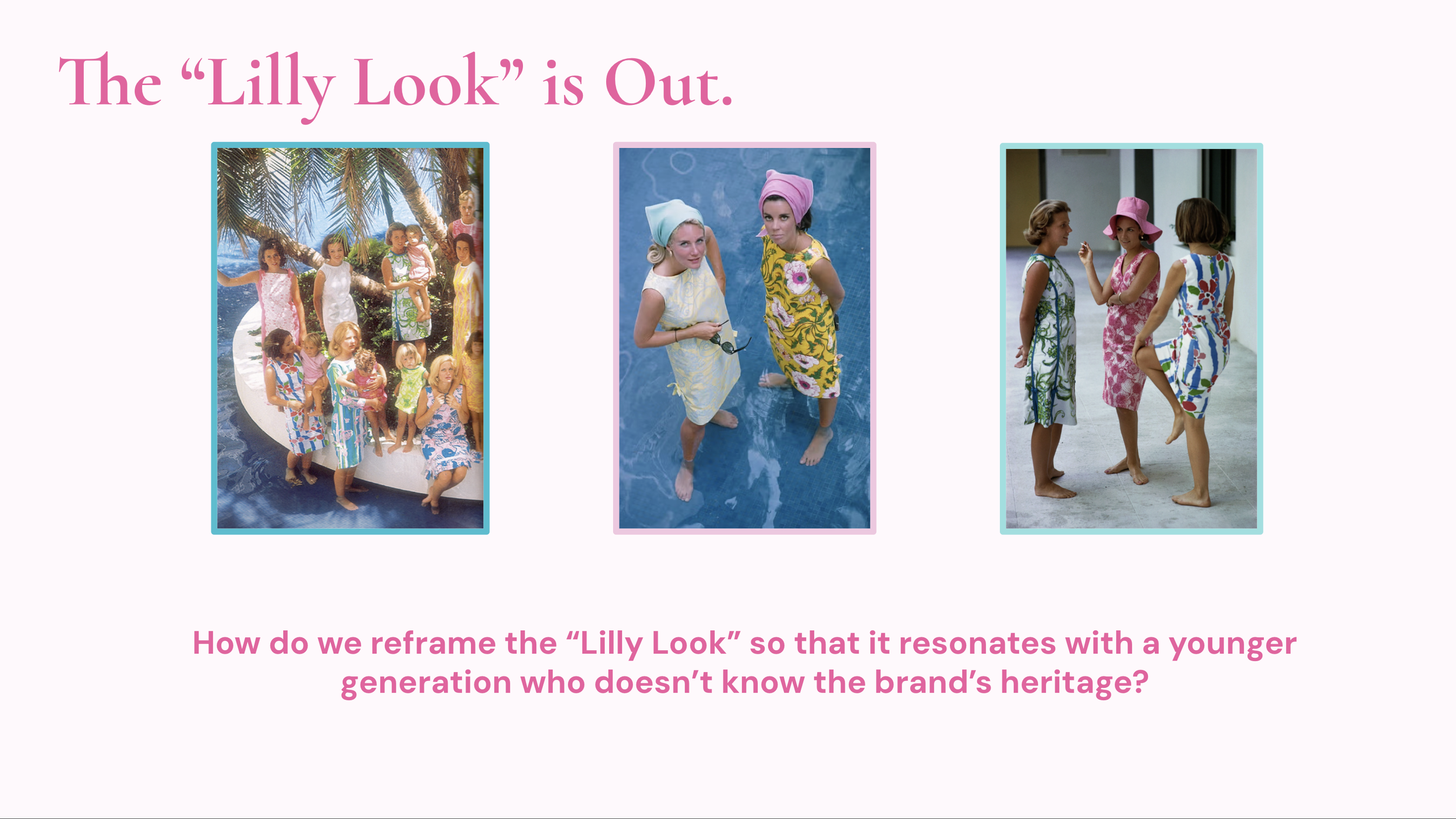
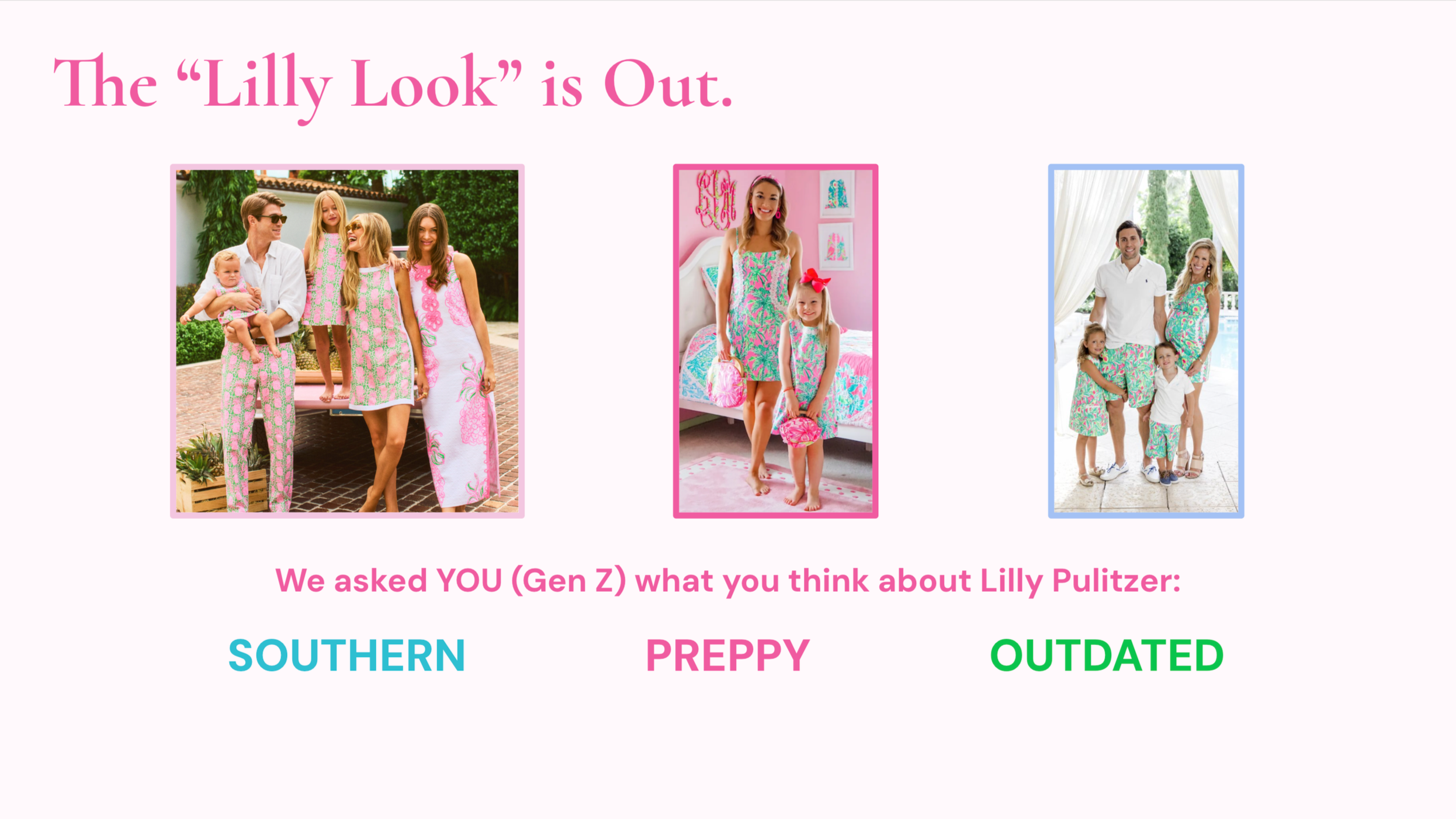
Lilly Pulitzer is known for bright resort prints and a Southern preppy aesthetic that has remained visually consistent for decades. When we surveyed college aged Gen Z consumers, 84 percent described the brand as southern, preppy, or outdated, and 39 percent associated it with terms such as elitist or rich girls. At the same time, 42 percent referenced positive nostalgia, including childhood memories and family connections. Recognition is strong, but relevance is weaker. Many students appreciate the colors and heritage, yet hesitate to wear the brand in everyday college settings because of the social meaning attached to it.
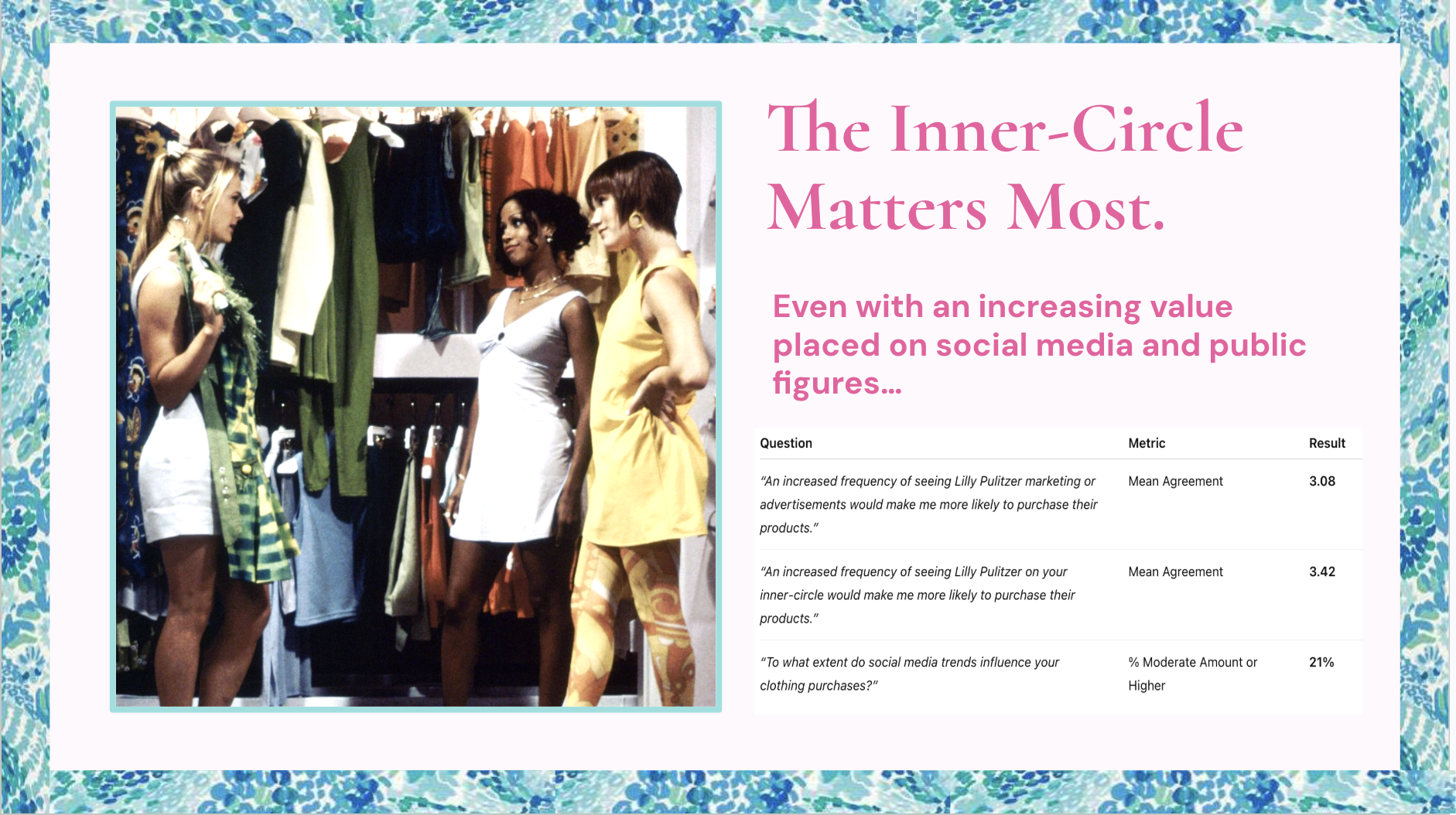
Peer influence emerged as a stronger driver of purchase intent than traditional advertising. When asked whether increased marketing exposure would make them more likely to purchase Lilly, respondents reported a mean agreement of 3.08. That number rose to 3.42 when the question shifted to seeing the brand worn by members of their inner circle. Only 21 percent reported moderate or higher influence from social media trends. These results suggest that while influencers may introduce trends, adoption is more likely when the brand is visible within close social networks, where peer validation shapes everyday dress.